
- About
- Products
-
Accessories
 PIX-Collapsible-Belt Length Measure
 PIX-Belt Drive Service Kit
 PIX-Digital Tension Meter
 PIX-X'Align Lasertool
 PIX-Belt Length Measure
 PIX-Analog Tension Tester
 PIX-Belt Profile Gauge
 PIX-Pulley Gauges
 PIX-Pulley Guage Banded Belts
 PIX-Pentagon Poly-V Belts Wear Gauge
 PIX-Pentagon Timing Belt Wear Gauges
 PIX-X'Slit Belt Cutting Machine
- Sustainability
- Careers
- Contact
 V-Belts
 Ribbed/Poly-V Belts
 Timing/Synchronous
 Banded Belts
 Special Belts
 Couplings
 Tensioners and Idlers
 Collapsible-Belt Length Measure
 PIX Belt Drive Service Kit
 Digital Tension Meter
 PIX X'Align Lasertool
 Belt Length Measure
 Analog Tension Tester
 Angle Guage
 Pulley Guage
 Pulley Guage Banded Belts
 Poly-V Pentagon
 Timing Pentagon
 PIX-X'Slit Belt Cutting Machine
Introduction
Precision is the foundation of any mechanical drive system. When timing accuracy drops, efficiency follows, and failure is never far behind. This is why timing belts and pulleys demand disciplined maintenance rather than reactive attention.
In both automotive and industrial environments, belt-related failures are rarely sudden. They are the result of small, ignored issues that build over time. Understanding how timing belts, fan belts, and pulleys work together is the key to extending service life and preventing unplanned downtime.
This guide focuses on practical, experience-based maintenance insights, not generic service intervals.
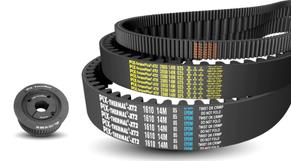
Why Timing Belts Require a Different Maintenance Approach
A timing belt transfers motion using positive tooth engagement. Each tooth must mesh accurately with the pulley to maintain synchronization between rotating components.
This design offers high accuracy but low tolerance for error.
Key characteristics:
- No slippage under normal operation
- Fixed speed ratios
- High sensitivity to tension and alignment
Unlike friction belts, timing belts do not degrade slowly when conditions are incorrect. When failure occurs, it is often immediate and disruptive.
How Pulleys Directly Affect Belt Life
Pulleys are active contributors to system performance. Their condition determines how evenly load is distributed across the belt teeth.
Pulley-related factors that influence belt life include:
- Tooth profile accuracy
- Surface finish
- Shaft alignment
- Bearing condition
A new timing belt installed on worn or misaligned pulleys will not perform to its design life, regardless of belt quality.
Common Pulley Wear Indicators
- Rounded or chipped teeth
- Uneven tooth spacing
- Lateral belt tracking
- Metallic dust near pulley faces
Pulley inspection should always be part of belt maintenance.
Timing Belt vs Fan Belt: Maintenance Differences That Matter
Although both are belts, timing belts and fan belts operate on different principles and should never be maintained the same way.
Timing Belt
- Positive drive using teeth
- Requires precise tension
- Sensitive to misalignment
- Failure may cause secondary damage
Fan Belt
- Friction-based drive
- Allows controlled slip
- More tolerant of alignment errors
- Failure usually results in loss of function, not damage
Applying fan belt practices to timing belts is a common cause of premature failure.
Early Warning Signs You Should Not Ignore
Most timing belt failures provide warning signs long before breakdown.
Belt-Related Indicators
- Polished or worn tooth surfaces
- Cracks on the belt backing
- Fraying at belt edges
- Uneven tooth wear across the width
Pulley-Related Indicators
- Belt running off-centre
- Rhythmic noise during operation
- Visible pulley tooth wear
- Vibration at steady speeds
These signs point to system imbalance rather than belt age alone.
Tension Errors: The Most Frequent Cause of Failure
Incorrect tension is one of the leading reasons timing belts fail prematurely.
Over-Tensioning Causes
- Internal cord fatigue
- Accelerated bearing wear
- Excess heat generation
Under-Tensioning Causes
- Tooth jumping
- Loss of timing accuracy
- Increased vibration
Correct tension must be set using manufacturer data and proper tools. Visual judgment is unreliable.
Alignment Errors Grow Over Time
Pulley misalignment may appear insignificant during installation but becomes destructive over extended operation.
Effects of misalignment include:
- Edge wear on belts
- Uneven tooth loading
- Noise and vibration
- Reduced transmission efficiency
Precision alignment checks should be scheduled not performed only after failure.
Environmental Conditions That Shorten Service Life
Operating environment plays a major role in belt and pulley durability, particularly in industrial and high-temperature regions.
Common stress factors:
- High ambient temperatures
- Dust and abrasive particles
- Oil or chemical exposure
- Moisture and humidity
Selecting belts and pulleys suited to the operating environment is essential for long-term reliability.
Replacement Strategy: Why Reactive Maintenance Costs More
Waiting for belt failure often leads to:
- Unplanned downtime
- Secondary component damage
- Emergency repair costs
- Production or operational losses
Predictive replacement based on inspection data and operating hours consistently reduces total ownership cost.
Proven Maintenance Practices for Long-Term Reliability
Reliable systems are maintained systematically, not reactively.
Practical Maintenance Checklist
- Inspect timing belts at defined intervals
- Check pulley tooth profiles and alignment
- Set belt tension using calibrated tools
- Replace belts and pulleys together when wear is evident
- Track wear patterns to identify recurring issues
Consistency in these practices delivers greater value than frequent component replacement.
Why Component Quality Cannot Be Compromised
Belts and pulleys operate as a matched system. Mixing components of different quality levels often results in imbalance and early failure.
High-quality timing belts paired with precision-machined pulleys:
- Maintain timing accuracy
- Reduce vibration and noise
- Improve transmission efficiency
- Extend service life
Quality is defined by material integrity and dimensional accuracy, not appearance.
Conclusion
Timing belts and pulleys rarely fail because of age alone. They fail due to misalignment, incorrect tension, pulley wear, or unsuitable operating conditions.
When maintenance focuses on system behaviour rather than isolated components, reliability improves, and downtime decreases.
Whether in automotive or industrial applications, disciplined care of timing belts, fan belts, and pulleys protects precision where performance matters most.