
- About
- Products
-
Accessories
 PIX-Collapsible-Belt Length Measure
 PIX-Belt Drive Service Kit
 PIX-Digital Tension Meter
 PIX-X'Align Lasertool
 PIX-Belt Length Measure
 PIX-Analog Tension Tester
 PIX-Belt Profile Gauge
 PIX-Pulley Gauges
 PIX-Pulley Guage Banded Belts
 PIX-Pentagon Poly-V Belts Wear Gauge
 PIX-Pentagon Timing Belt Wear Gauges
 PIX-X'Slit Belt Cutting Machine
- Sustainability
- Careers
- Contact
 V-Belts
 Ribbed/Poly-V Belts
 Timing/Synchronous
 Banded Belts
 Special Belts
 Couplings
 Tensioners and Idlers
 Collapsible-Belt Length Measure
 PIX Belt Drive Service Kit
 Digital Tension Meter
 PIX X'Align Lasertool
 Belt Length Measure
 Analog Tension Tester
 Angle Guage
 Pulley Guage
 Pulley Guage Banded Belts
 Poly-V Pentagon
 Timing Pentagon
 PIX-X'Slit Belt Cutting Machine
Introduction
Modern farming relies heavily on mechanized equipment. According to data from the Food and Agriculture Organization (FAO), global agricultural productivity has increased significantly over the past decades due to advances in machinery and equipment used in cultivation, harvesting, and irrigation. Tractors remain the backbone of this mechanization, performing multiple operations across farms of all sizes.
Behind the performance of tractors and other agricultural machines are several critical components that ensure reliable operation. One such component is the agriculture belt, which plays a vital role in transmitting power between different parts of the machine.
A well-designed tractor belt ensures efficient energy transfer, smooth mechanical movement, and consistent performance under demanding agricultural conditions. Without durable belts, many tractor-driven systems would struggle to operate efficiently.
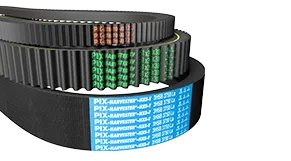
Understanding Agriculture Belts in Farming Equipment
An agriculture belt is a power transmission component used in tractors and farm machinery to transfer mechanical energy between rotating shafts. These belts allow engines to drive various systems such as cooling fans, pumps, alternators, and harvesting mechanisms.
Agricultural machinery often operates in challenging environments, including dust, heat, vibration, and heavy load conditions. Because of this, tractor belts must be engineered to deliver strength, flexibility, and resistance to wear.
High-quality tractor belts are typically designed to handle:
- Continuous power transmission
- Heavy mechanical loads
- High temperature operating conditions
- Dust and debris common in farming environments
These characteristics help ensure reliable machinery performance throughout demanding agricultural operations.
The Role of Tractor Belts in Agricultural Machinery
Tractors are multifunctional machines used for ploughing, planting, hauling, and powering attachments. A tractor belt contributes to these operations by maintaining efficient power flow within the mechanical system.
Power Transmission
Belts transfer power from the engine to auxiliary components such as water pumps, fans, and alternators. This ensures that supporting systems continue to operate efficiently while the tractor performs field tasks.
Supporting Agricultural Attachments
Many farm implements connected to tractors rely on belt-driven systems to function. Belts help operate components within harvesters, threshers, and other agricultural equipment.
Maintaining Mechanical Efficiency
Well-designed belts minimize energy loss during power transmission. This improves the overall efficiency of agricultural machinery.
Why Durability Matters in Agriculture Belts
Agricultural operations often involve long working hours under difficult conditions. Machinery is exposed to dust, soil particles, vibration, and fluctuating loads.
Because of these conditions, agriculture belts must provide durability and long service life. A poorly constructed belt may slip, crack, or wear quickly, leading to machinery downtime.
High-performance tractor belts are typically engineered with:
- Reinforced tensile cords for strength
- High-quality rubber compounds for flexibility
- Resistance to abrasion and environmental exposure
- Stable performance under heavy mechanical stress
These features help belts maintain performance even during extended agricultural operations.
Common Applications of Tractor Belts in Farming
Agriculture belts are used in a wide range of farming machinery. Their versatility allows them to support multiple mechanical functions across agricultural equipment.
Typical applications include:
- Tractor engine systems
- Combine harvesters
- Irrigation pump systems
- Feed processing equipment
- Grain handling machinery
- Agricultural conveyor systems
In each of these systems, belts ensure smooth power transmission that keeps the equipment operating efficiently.
Choosing the Right Agriculture Belt
Selecting the correct tractor belt is important for maintaining machinery reliability. Farmers and equipment operators should consider several factors when choosing belts for agricultural equipment.
Compatibility with Equipment
Belts must match the specifications recommended by the equipment manufacturer.
Load Capacity
Agricultural machinery often handles heavy loads, so belts should be designed for high tensile strength.
Environmental Resistance
Belts should withstand heat, dust, and moisture commonly encountered in farming environments.
Quality Manufacturing
Using belts produced by reputable manufacturers ensures consistent performance and durability.
Companies such as PIX Middle East specialize in manufacturing high-quality belts designed specifically for demanding industrial and agricultural applications.
Maintenance Tips for Tractor Belts
Even the most durable agriculture belts require proper maintenance to ensure long service life.
Some recommended practices include:
- Regularly inspecting belts for cracks or wear
- Maintaining correct belt tension
- Ensuring pulleys remain aligned
- Replacing belts before significant damage occurs
Routine maintenance helps prevent unexpected equipment failures during critical farming operations.
The Importance of Reliable Belt Technology in Modern Farming
Agricultural machinery continues to evolve as farms adopt advanced technologies to improve efficiency and productivity. Reliable mechanical components remain essential for supporting these innovations.
High-performance agriculture belts and tractor belts contribute significantly to the reliability of farming equipment. By ensuring efficient power transmission and durable performance, these components help farmers maintain consistent operations during planting, harvesting, and field preparation.
Conclusion
Efficient agricultural machinery depends on reliable mechanical components that support consistent performance in demanding conditions. The agriculture belt is one such component that plays a crucial role in ensuring tractors and farming equipment operate smoothly.
From power transmission to supporting various agricultural attachments, tractor belts contribute directly to the productivity and reliability of modern farming operations.
For businesses and equipment operators seeking dependable belt solutions, PIX Middle East offers advanced belt technologies designed to support agricultural machinery performance and durability in demanding environments.